
Bench Warrants in Hamden County
Connecticut piles several labels onto court-issued custody process. A bench warrant usually follows a court-order or appearance problem. A rearrest warrant or criminal capias can follow a failure to appear. A violation-of-probation warrant targets alleged noncompliance with probation terms. Not every one of these is a new criminal accusation, yet each can authorize an officer to take the named person into custody. Routine Hamden criminal and motor-vehicle cases belong to Connecticut Superior Court, Geographical Area No. 23. Hamden is a town in New Haven County, not a county government with its own warrant court. It has no municipal criminal court, no justice-of-the-peace bench, no county clerk, and no county sheriff. So the Hamden County Warrant Records label is just a local reference. The actual legal authority statewide is the Judicial Branch.
GA 23 Handles Hamden County Bench Warrants
Most Hamden County bench warrants live at Superior Court GA 23, 121 Elm Street, New Haven, CT 06510. Call the clerk at (203) 789-7461 during weekday hours, 9:00 a.m. to 5:00 p.m. That building handles criminal, motor-vehicle, traffic-ticket, and infraction matters. Major crimes, transferred cases, and probation issues can sit instead in the New Haven Judicial District at 235 Church Street, reachable at (203) 503-6800. Check both if you are unsure which court holds the file.
Superior Court GA 23
121 Elm Street
New Haven, CT 06510
(203) 789-7461
Routine criminal and motor-vehicle files
New Haven Judicial District
235 Church Street
New Haven, CT 06510
(203) 503-6800
Major criminal and district files
How a Bench Warrant Is Issued
A judge issues this process using the court's own authority. Connecticut law lets a rearrest warrant or capias follow a failure to appear. A capias can also reach a defendant who violates an appearance order. One rule generally bars issuance before 4 p.m. on the alleged failure date unless good cause supports earlier action. Read the docket event and the current order. That tells you what actually happened in the file, far better than any broad label. For the governing text, the official Connecticut criminal-process chapter sets out § 54-2a and the related warrant provisions.
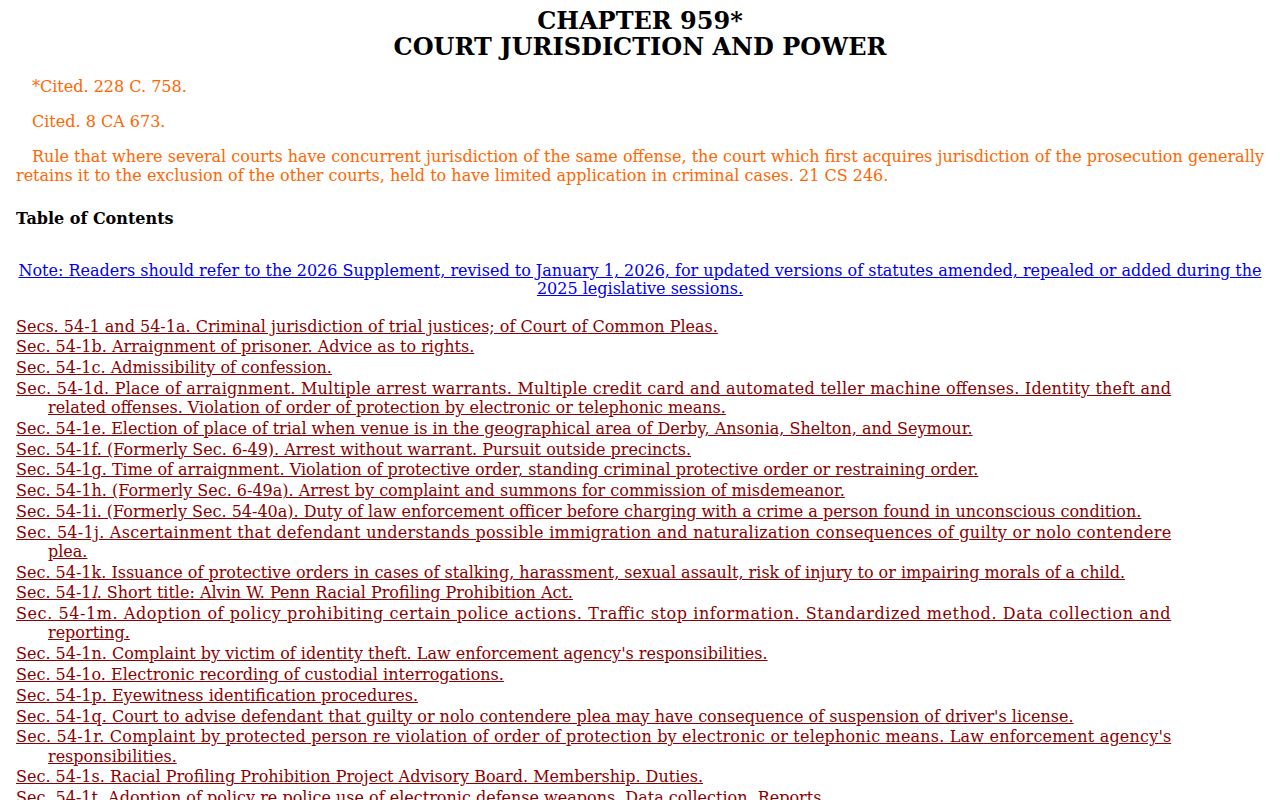
That statute places a Hamden bench warrant squarely inside Superior Court authority. No town or county warrant court exists here. After issuance, records move from the Judicial Branch Criminal Motor Vehicle System into the Paperless Arrest Warrant Network, known as PRAWN. Hamden Police Communications enters and updates applicable local, state, and federal records too. Those systems let officers confirm and serve a warrant on the spot. They are not public name-search tools. Nobody can get a PRAWN account to run a self-check.
Three Hamden County Bench Warrant Labels
The exact words on a Hamden County bench warrant matter. Different labels point to different proceedings. Copy the wording straight from the docket and repeat it when you call the clerk. That one habit keeps a criminal appearance issue from landing at the civil support office, and it stops a probation matter from being treated like a routine missed date.
- Rearrest warrant
- Connecticut process directing arrest after a release or appearance failure.
- Criminal capias
- A court command to take a defendant into custody after an appearance-order violation.
- Violation of probation
- A warrant based on an alleged breach of probation conditions, often involving Adult Probation.
- Capias mittimus
- A separate civil process used in family-support and court-order enforcement matters.
Connecticut does not use the Texas phrase "capias pro fine." A family-support capias in Hamden County is not a new criminal charge. It grows out of the support case itself.
Bench Warrant vs Arrest Warrant
A bench or rearrest warrant grows from an existing case and a missed duty. An arrest warrant starts differently. It begins with a prosecutorial application and an affidavit establishing probable cause for an offense. Connecticut statutes sometimes say "bench warrant of arrest" in that probable-cause setting, so the trigger and docket tell you more than the short title. The companion Hamden County arrest warrant explanation walks through that process.
| Feature | Bench or Rearrest Warrant | Arrest Warrant |
|---|---|---|
| Typical trigger | Missed appearance or violated order | Probable cause for an offense |
| File setting | Usually an existing court case | Criminal accusation and sworn application |
| Public clue | FTA, capias, VOP, or rearrest event | Charge, application, or post-arrest record |
| Next step | Ask court about recall, appearance, or bond | Ask counsel and court about surrender or bond |
Find a Hamden County Bench Warrant File
Begin with the official Connecticut criminal and motor-vehicle case lookup. Enter the person's own last name, first initial, and birth year. Select New Haven Geographical Area 23 and the right category. Search the New Haven Judicial District as well if the matter is major, transferred, or probation-related. Open a likely case. Note the docket number, court location, case status, next date, and any FTA, rearrest, capias, VOP, or OTI event on a Hamden County bench warrant file.
- Write down the complete docket number and court location.
- Call that clerk and ask whether the displayed event is current.
- Call Hamden Police at (203) 230-4000 for local routing and safety instructions.
- Ask counsel what appearance, motion, surrender, or release procedure fits the file.
The public display is a case-status aid, not the official Hamden County record. It omits juvenile and youthful-offender cases, erased information, sealed material, and some restricted records. Its dates can trail an agency update. A blank search does not legally establish that no warrant exists.
How to Resolve a Hamden County Bench Warrant
Resolution starts with the issuing file, because that court controls the warrant and the release terms. Hamden officials publish no amnesty week, recall hotline, universal motion form, fixed bench-warrant bond schedule, or walk-in surrender window. Never show up at a police station on the strength of a web result. Confirm the process with the clerk and an attorney first. For a Hamden County bench warrant, a planned court step is the only safe route.
- Identify the docket, exact warrant term, issuing court, and next event.
- Ask the clerk about filing and calendar procedure, while recognizing staff cannot give legal advice.
- Discuss a motion to recall or quash, scheduled appearance, or arranged surrender with counsel.
- Confirm any bond with the current order and ask where it may be posted.
- After appearance, arrest, recall, or release, ask when the status will update.
Caution: An old bench warrant is not necessarily expired. Only the court's action, service, recall, or lawful disposition changes its status.
Hamden County Bench Warrant Bond Terms
Once a judge sets bond after a Hamden County bench warrant comes back, the GA 23 courthouse guide lists the ways to post it. Exact cash works. So does a ten-percent surety bond through an approved provider, a bail bondsperson, or real estate. One rule stays firm. A bondsperson's fee never comes back. Cash can be returned after final disposition or entry into a diversionary program, but only through a clerk-issued check and only with the original receipt and photo identification. Keep these as general courthouse options. They do not set the terms of any Hamden County bench warrant, and no local warrant bond chart, warrant-only portal, or posted payment policy exists. Ask the clerk or a bail commissioner to read the active order before you pay anything. Posting bond settles custody and release, not the case itself. The criminal, motor-vehicle, probation, or support matter underneath it continues in court.
Keep the receipt: The GA 23 guide says a cash-bond return requires the original receipt or a lost-receipt affidavit and photo identification.
Which Hamden County Court Issued It
Match the docket to the right office before you call. Anything tied to GA 23 starts with that clerk, while a major criminal case or a transferred matter may sit with the New Haven Judicial District clerk instead. A Hamden County VOP raises a second contact. New Haven Adult Probation, 867 State Street, (203) 789-7876, works those cases, though probation is not a public warrant database. Juvenile Matters at 239 Whalley Avenue follows restricted procedures, so skip the ordinary police records counter for those files. Family-support capiases run on a civil track. Support Enforcement Services at 414 Chapel Street, (203) 789-7485, and the family-support magistrate handle that process, and state marshals, including the State Marshal Commission's Capias Unit, may execute qualifying civil capiases. The State Marshal Commission manual spells out that separate civil capias service program.
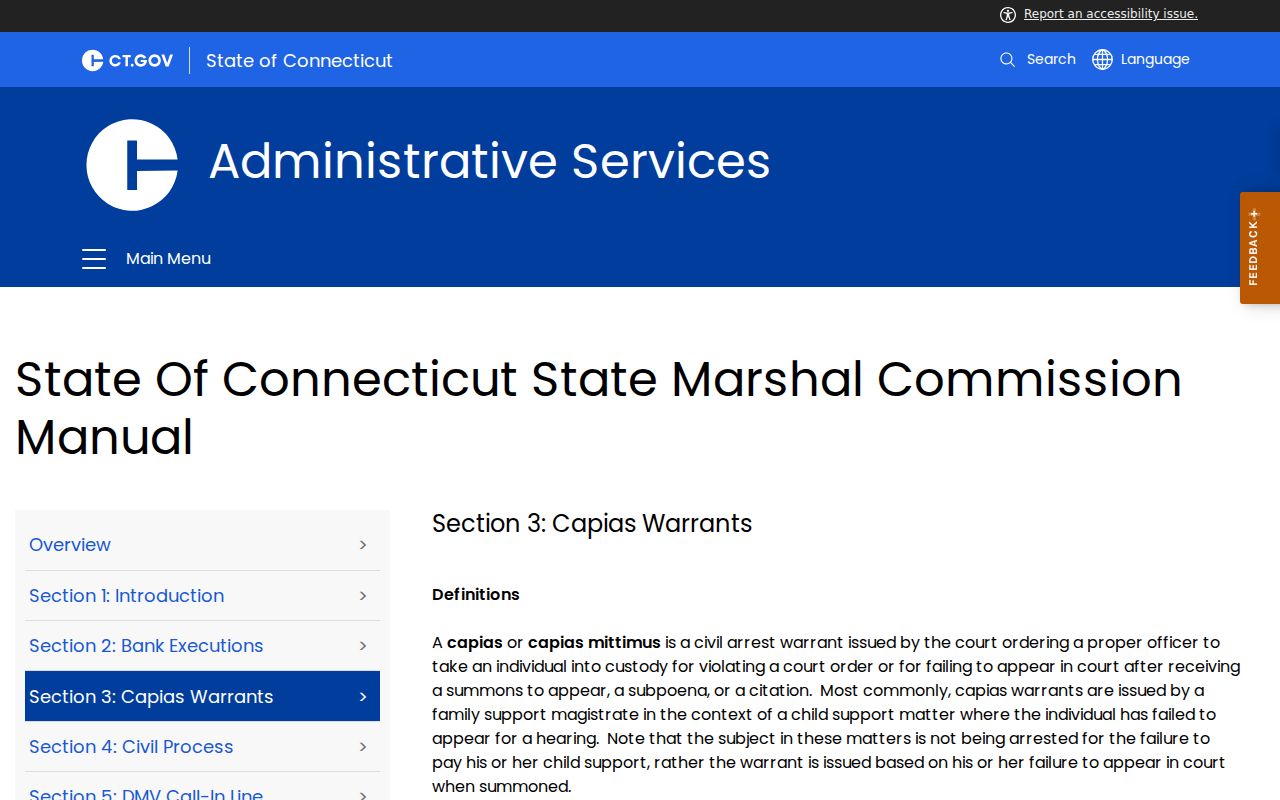
This state material explains why a Hamden County family-support capias routes through marshals and support court rather than the criminal bench-warrant channel. Hamden Police handles local process assigned to it. It cannot recall a judge's order.
Police Cannot Clear Hamden County Bench Warrants
Hamden Police Policy 015-002 keeps a wanted-person and warrant file, in physical or electronic form, under Communications. Dispatchers and sworn officers can reach it around the clock. They enter warrants on receipt and update records after service. What the policy does not create is a public roster or a warrant-clearing counter. For confirmation instructions and proper routing in Hamden County, call the non-emergency line at (203) 230-4000. No record online? Send a focused request to the HPD Records Division at 2900 Dixwell Avenue through Hamden's Connecticut Freedom of Information Act route. Name a defined record, and add the docket or case number and date range if you know them. Records staff may process what the agency holds or send you to the Judicial Branch. That response still does not recall a Hamden County warrant. Only the court that created the file, or law enforcement it authorized, can confirm and clear it.